Strength Training
Progressive Overload for Beginners: How to Keep Getting Stronger Safely
By MyFitnessGrowth Editorial Team · 2026-10-08 · 7 min read
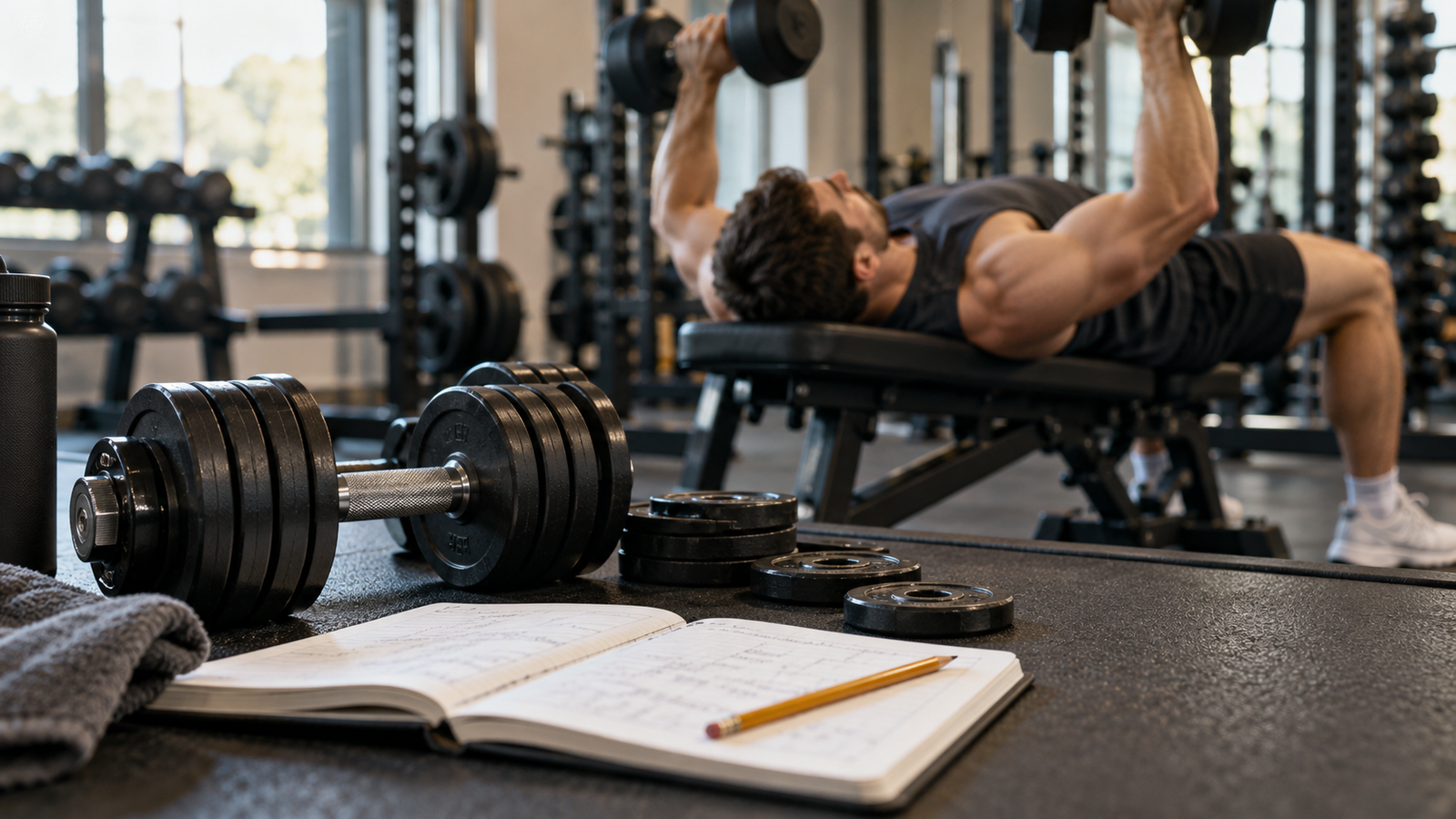
Progressive overload means asking your body to do slightly more over time so it has a reason to adapt. The change might be a little more weight, another repetition, better technique, a larger comfortable range of motion, or the same work with less fatigue. It does not mean adding weight at every workout or training to failure every day.
Why Progress Needs to Be Gradual
Strength and muscle develop when training provides an appropriate challenge and recovery allows adaptation. If the challenge never changes, progress can slow. If it increases too quickly, technique often deteriorates and joints, tendons, sleep, or motivation may struggle to keep up.
A useful target is consistent, repeatable training. The best progression is one you can recover from and perform with stable technique.
Five Ways to Apply Progressive Overload
- Add repetitions: move from 8 to 9 repetitions while using the same weight.
- Add a small amount of load: increase resistance only after you can complete the top of your target repetition range.
- Improve technique: use a controlled tempo, stable posture and the intended range of motion.
- Add a set: increase weekly volume when recovery is good and the current workload feels manageable.
- Improve work capacity: complete the same quality work with slightly shorter rest periods, but do not rush heavy compound lifts.
Use the Double-Progression Method
Choose a repetition range, such as 8–12. Start with a weight you can lift for 8 controlled repetitions while keeping approximately two repetitions in reserve. Over several sessions, add repetitions until you can perform 12 on every planned set with good form. Then increase the load by the smallest practical amount and return to the lower end of the range.
Example: perform three sets of dumbbell chest press. Your sessions might progress from 10, 9, 8 repetitions to 12, 12, 12. At that point, move to slightly heavier dumbbells and aim for about 8–10 controlled repetitions again.
How Hard Should Sets Feel?
Most beginner working sets can finish with roughly two or three good repetitions still possible. This is often described as 2–3 reps in reserve. You should feel challenged, but your final repetitions should still resemble your first. Save true maximum efforts for appropriate testing under experienced supervision rather than routine workouts.
When Not to Increase the Load
- Your technique changes noticeably to finish the set.
- You cannot reach the bottom of your planned repetition range.
- You have unusual joint pain rather than normal muscle effort.
- Your sleep, energy or performance has declined for several sessions.
- You are returning after illness, injury or a long training break.
In these situations, repeat the same workload, reduce it temporarily, or seek qualified guidance if pain or symptoms persist.
A Simple Weekly Example
Train each movement pattern two or three times per week using a manageable number of sets. Record the exercise, load, repetitions and a brief difficulty rating. At the next session, try to improve one small variable while preserving form. A one-repetition improvement is still progress.
Common Mistakes
- Changing exercises constantly: keep key movements long enough to measure improvement.
- Adding load too quickly: small increases are easier to control and recover from.
- Ignoring recovery: food, sleep and rest days influence whether training produces adaptation.
- Comparing with other people: progression depends on training age, body size, equipment and individual recovery.
- Treating soreness as the goal: soreness is not required for an effective session.
How to Track Progress
A basic training log is enough. Record the date, exercise, sets, repetitions, resistance and an effort note. Review trends over several weeks instead of judging one session. Progress is rarely perfectly linear; stress, sleep and normal day-to-day variation can affect performance.
Final Takeaway
Progressive overload works best as patient, measurable improvement. Build stable technique, use a repetition range, leave a small margin before failure and increase only one variable at a time. If an exercise causes sharp pain, dizziness, chest pain or unusual breathlessness, stop and seek appropriate medical assessment rather than pushing through it.
This article provides general fitness education and is not individualized medical advice.